
Bywater Call Brings the Heat to the Warehouse
A powerhouse seven-piece band makes its first St. Catharines appearance
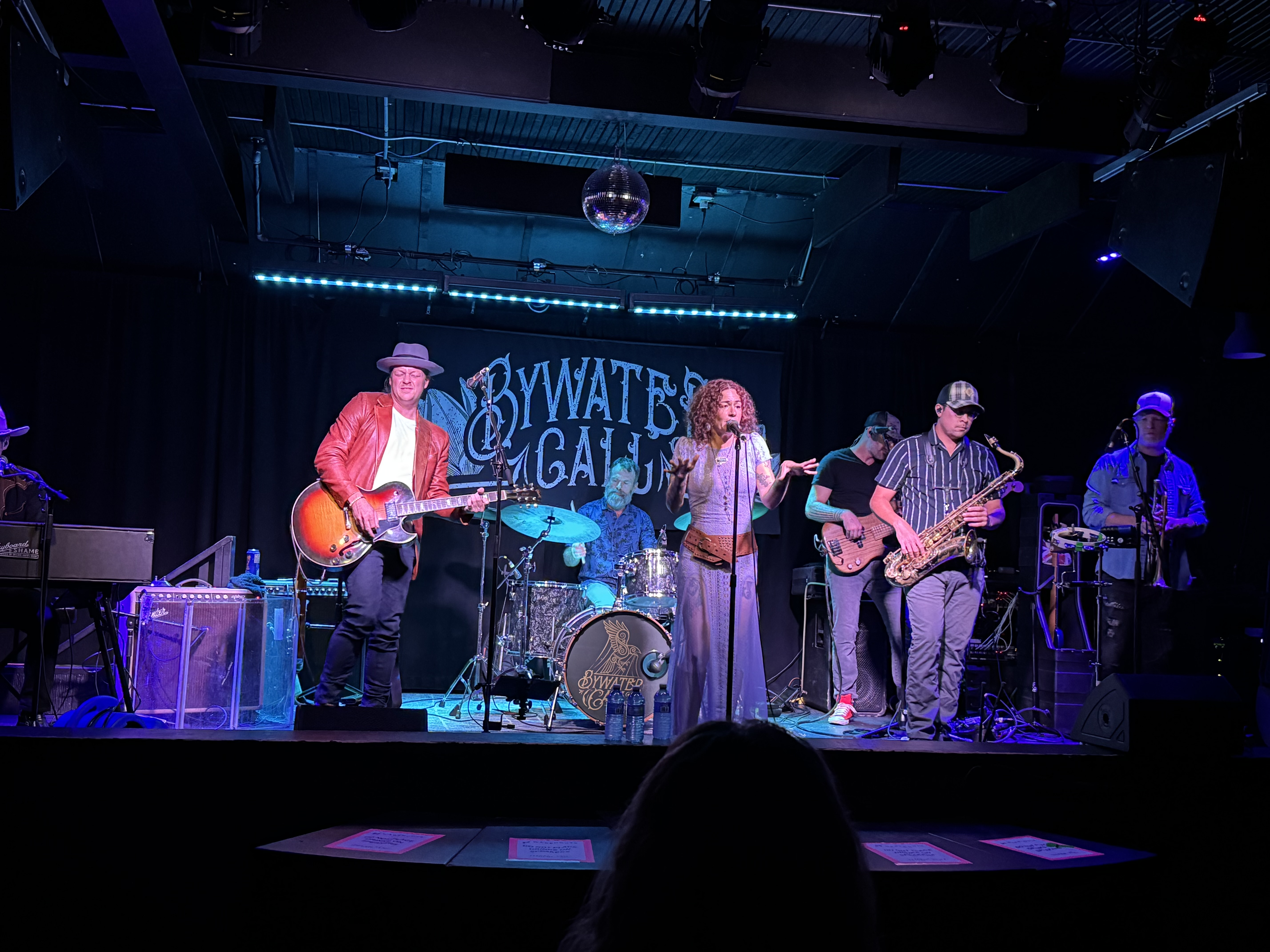
Bywater Call made its first St. Catharines appearance Thursday night at the Warehouse Concert Hall, bringing a powerhouse seven-piece band to a room that should have held far more people. But for those fortunate enough to be there, the modest crowd somehow made the Warehouse the perfect room for the night — intimate, attentive and completely locked in to a band delivering soaring vocals, superb musicianship and one memorable performance after another.
They had my attention before they played a note. Walking onstage to Little Feat's “Spanish Moon” is a pretty reliable way to get on my good side, but Bywater Call hardly needed the assistance. Once Meghan Parnell opened her mouth, the evening belonged to the seven musicians onstage.
Parnell has an extraordinary instrument. “Powerful” doesn't quite cover it; there were moments Thursday night when “iron lungs” seemed more appropriate. She can soar over a seven-piece band without sacrificing control or expression, then pull things back when the song calls for it. More than once during the evening I found myself wondering how a singer this good isn't already a household name.
Guitarist Dave Barnes was the other immediate attention-grabber. Playing a Gibson ES-style guitar for most of the night, Barnes had tone for days and plenty of room to stretch out, with a solo featured in one form or another through much of the set. There were moments that brought Carlos Santana or Mark Knopfler briefly to mind, but neither comparison really describes him. There's a funkiness to Barnes' playing, along with some terrific slide work, that gives him a voice very much his own.
Parnell and Barnes may command your attention first, but focusing only on the two of them would miss much of what makes Bywater Call work. This is very much a seven-piece band, and as the night unfolded, the players surrounding them repeatedly demanded attention of their own.
The horn section is no ornamental add-on. Saxophonist Julian Nalli and trumpeter Stephen Dyte were involved throughout the night, adding colour to the arrangements even when they weren't out front, occasionally picking up percussion or adding vocals rather than simply disappearing to the side of the stage between horn parts. Dyte even played some guitar. Nalli was given room for a couple of extended solos and made the most of both, showing just how much fire this band has available beyond its obvious focal points.
Keyboardist Andrew Moljgun may have been the night's unsung hero. He spent much of the show doing exactly what a great ensemble player should — filling out the sound without demanding attention — until a late solo suddenly put him squarely in the spotlight. My reaction was essentially, where did THAT come from? Moljgun had been quietly holding things together all night, then absolutely killed when his opportunity arrived.
Bassist Mike Meusel may have delivered my favourite instrumental surprise of the night. During an extended guitar-and-trumpet exchange in “Sunshine,” Barnes and Dyte ostensibly had the spotlight, trading solos back and forth. Meusel settled into a locked-in stream of sixteenths underneath them, laying down a groove that brought Rocco Prestia and Jaco Pastorius to mind. Barnes and Dyte were supposed to be the attraction at that moment — but I couldn't stop watching the bass player. His own bass solo later in the evening was impressive, too, but strangely, it was this moment supporting someone else's showcase that stayed with me.
Drummer Bruce McCarthy was the only member who seemed not to receive an extended showcase of his own, but he hardly needed one. He was fire all night, anchoring everything from the band's heavier moments to those deep, loose grooves — and when the encore finally began with drums and bass, the rhythm section got its moment before the entire band launched into something I never expected.
What impressed me most as the night went on was how naturally all seven players fit together. This isn't a singer and guitarist with five musicians filling out the arrangements. Bywater Call sounds like a band. Parnell seemed perfectly comfortable stepping away from centre stage — sometimes quite literally retreating to the side or behind the others — and letting the musicians stretch out. The horns remained part of the fabric even when they weren't featured, the rhythm section kept everything moving underneath, and nobody seemed particularly interested in competing for attention.
The Warehouse Concert Hall is a room built with live music in mind, and it showed. The guitar sat a little too far out front during the opening number and Moljgun's keyboards were initially buried, but the balance was corrected quickly. From there, the mix allowed a seven-piece band with two horns, keyboards and plenty of guitar to sound full without becoming cluttered — no small accomplishment in a room that intimate.
My vantage point for most of the night was the bar, thanks to Nicole — Warehouse bartender for the evening and, as it happens, frontwoman for JIN, another local band I've caught at Helliwell Hall — who graciously let me occupy a piece of her real estate for most of the show. It's one of those little reminders of how interconnected Niagara's live music community can be: sometimes the person pouring your drink one night is the one onstage the next time you see her.
Parnell kept the crowd involved between songs, sharing some of the stories behind the material and drawing the room into the show. When the band invited the room into a singalong on “Is This Thing On?”, there was no reluctance from the audience. This may have been a modest crowd, but it was a listening crowd — people danced, certainly, but they were also paying attention. Solos were met with cheers, comments from the stage got answers from the floor, and as the night went on the enthusiasm in the room increasingly made the attendance figure feel irrelevant.
And then came the encore. McCarthy and Meusel started things off before the rest of the band joined in, launching into a funky groove that gave me no immediate clue where they were headed. It wasn't until Parnell began singing the lyrics that I realized I was hearing The Band's “The Weight” — one of my personal favourites and a song I've heard countless times. Bywater Call's arrangement was genuinely transformative; rather than simply putting their stamp on a familiar classic, they pulled it apart and rebuilt it into something wonderfully funky while somehow leaving the song itself intact.
By the time “The Weight” ended, the crowd was wildly appreciative, and deservedly so. Bywater Call's first visit to St. Catharines may not have filled the Warehouse, but the people who were there listened, responded and got one hell of a show in return. Sometimes a band deserves a bigger room and a bigger audience. On this particular night, though, I'm not sure I'd have wanted to experience it anywhere else.
Niagara Arts Review thanks the Warehouse Concert Hall for providing media access for this performance.