
Chapter 2, by Brock @ PAC
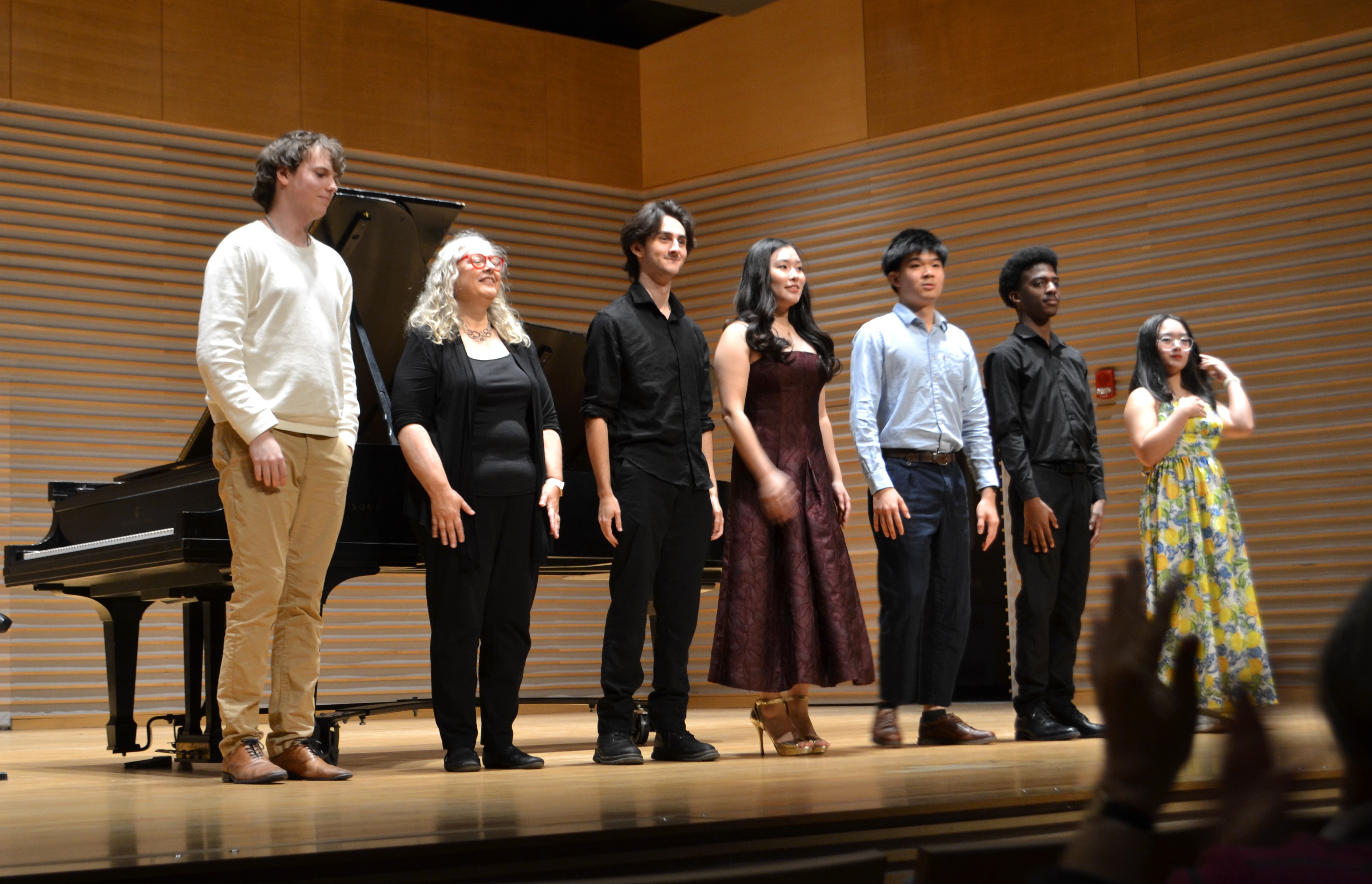
Session two of the concert series staged by Brock's Department of Music was a delight in many ways. The performers were obviously talented, the selections were not only challenging but enjoyable, and a brief return to clement weather made the walk over to the FirstOntario Performing Arts Centre actually enjoyable.
The opening selection, voiced by soprano Seo-Yoon Yoonie Park, was Ennio Morricone's “Nella Fantasia.” Morricone is one of my generation's artists, and I rank him with such luminaries in the genre as John Williams and Leroy Anderson. Miss Park's presentational manner is highly expressive, with top-drawer diction and ease with the piece's extreme range changes. Possessing a radiant smile and being accompanied by Erika Reiman's Steinway are pure icing.
Pianist Joe Carmody presented his own arrangement of Danny Elfman's Corpse Bride soundtrack from the animated movie. Difference and out-of-box thinking are the composer's mantra (think Beetlejuice, The Simpsons or MIB), but Carmody's interpretation made the version listenable and pleasant. To perform AND arrange defines surefire musical talent.
The viola's range and pitch are always more enjoyable than the violin's to aging ears. That lower fifth may not seem much, but it is noticeable. Joshua Francis presented the first movement, Allegro, of Franz Anton Hoffmeister's Concerto in D major. This young musician displays amazing stage presence. The work, while familiar (even if the composer's name isn't), is a technical challenge in both bowing and intricate fingering. Francis “nailed it,” to use today's vernacular.
Frédéric Chopin's Étude in E minor is popularly called “Wrong Note,” but this is a misnomer. The composer didn't “screw up” (as I ofttimes do), but the nickname refers to the dissonance the piece displays. It also presents a challenge for the player, and Hubert Sze was undaunted. The many tempo and emphasis requirements the work presents were no obstacle for this young man. Any fan of classical music should be able to notice the slight similarities in style and substance among Chopin's works. This piece, as well as the afternoon's final work, reinforces that observation.
Contemporary composer Jeanine Tesori wrote the music for Thoroughly Modern Millie, a Broadway musical set in the Roaring Twenties. Amy Duong performed the famous “Gimme Gimme” number, in which the eponymous character makes demands of her “Jimmy.” While Duong's voice was lovely, I had difficulty with her projection and couldn't decipher all the lyrics. Fortunately, I recalled the song's recurring “That Thing Called Love” phrase. Duong's vocal range is mezzo-soprano. For reference, the approximate range of a mezzo-soprano is A3–A5, compared with C4–C6 for a soprano, although the ranges overlap.
The final and longest presentation was Chopin's popular Ballade No. 1 in G minor. Played exquisitely by Stephen Babin, this opus usually runs approximately 10 to 12 minutes; Babin's interpretation ran fifteen. Obviously, no extra notes were added, so one must assume that this interpretation had additional warmth and dramatic pauses that reflected the soloist's joy in playing this masterful work. As I wrote in describing Sze's Chopin piece above, the composer's glissades, intricacies and melodies put Chopin in my “Favorites” column. What a way to pass a noon hour.
In previous columns, I've made mention of FOH. The Front of House staff are important enough for U of T's Fine Arts Faculty at Erindale to actually make learning it a required course for a degree. Another staffing position that goes ofttimes unappreciated is the Stage Manager. Moving mikes, podia, raising or lowering a piano lid (called a “cap” in my day), or removing a music stand, the job at our PAC is faultlessly performed by Vanessa, whose silent and nondistracting execution today even garnered her applause.
Next Tuesday, Concert No. 3.